Article
Child care: 'The glue that makes everything work'
August 25, 2026

In May, the Montana Budget & Policy Center, with support from the Women's Foundation of Montana, released the 2026 Status of Montana Women: Advancing Policy for Economic Equity report. This summer, we're digging into specifics from the report and spotlighting stories from WFM grantees advancing these issues across Montana.

Child care in Montana is an equation that leaves both families and providers feeling like they are losing. While it is prohibitively expensive for many parents, if they can even find an available slot, the predominantly female child care workforce remains underpaid and underappreciated.
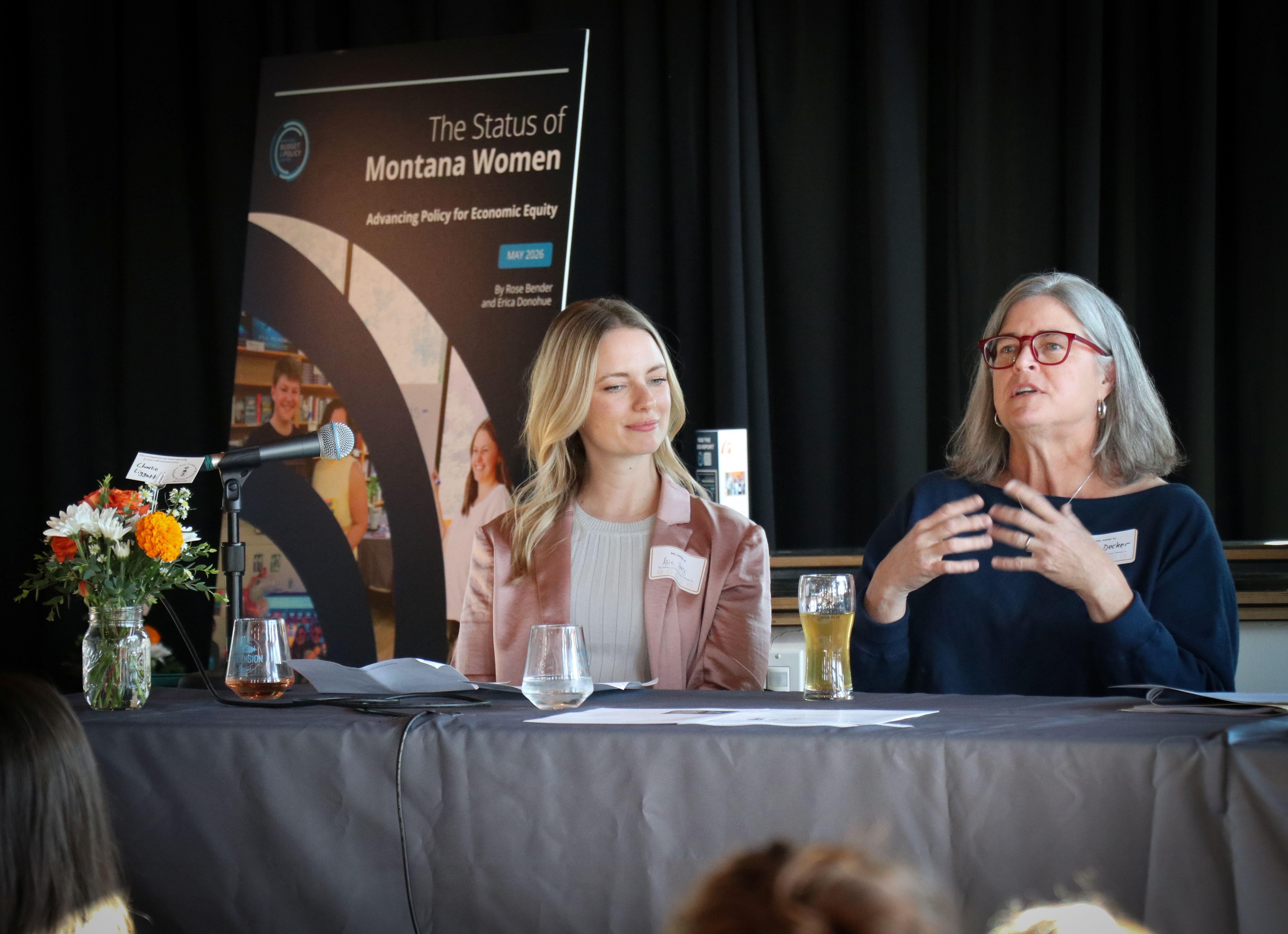
“It is invisible, but it is like the glue that makes everything work,” said Grace Decker, director of Montana Advocates for Children, who has spent her career working in early childhood education.
The 2026 Status of Montana Women: Advancing Policy for Economic Equity report, authored by the Montana Budget & Policy Center with support from the Women’s Foundation of Montana, found that while child care is essential for businesses to operate and women to participate in the workforce, decades of policies and public perceptions have devalued the work of caring for young children. As the report notes, the Fair Labor Standards Act of 1938, intended to protect workers from unfair pay practices, excluded caregiving labor.
The report found that challenges in accessing affordable child care result in lower labor force participation among women. In Montana, the labor force participation rate is 76% for women, compared with 83% for men. The report also notes that in 2024, approximately 63,000 parents, representing 11% of all Montanans working or actively looking for work, were unable to participate fully in the workforce because of family responsibilities and a lack of child care.
After having children, women experience a permanent decline in their likelihood of working and a temporary drop in earnings, according to the report.
“Who is it that takes the hit?” Grace said. “It’s mom, mom that leaves the workforce.”
The 2024 Status of Montana Women report found that 37% of Montana women who would like to work but are not in the labor force cited “caring for family” as a reason they stopped looking for employment. The first Status of Women in Montana report, published in 2004 by the Institute for Women’s Policy Research, found that 71% of Montana women with children participated in the labor force, compared with just 66.8% of women with children younger than 6.
“Child care is underappreciated, undervalued for so many reasons. And because child care has been underpaid, it has been performed by women, mostly women of color, many immigrant women, and women without access to power,” Grace said. “And powerful men depend on child care and never articulate that fact.”
This year’s report includes several policy recommendations to ensure that this critical foundation of Montana’s economy, and the people who provide it, receive adequate support.
In 2023, Montana invested state dollars to expand the Best Beginnings Child Care Scholarship Program to more families. According to the report, the state should build on that investment by expanding eligibility for the Best Beginnings program to the maximum level permitted by the federal government, allowing more working parents to access affordable child care.
To strengthen the child care industry and help retain workers, Montana should look to states such as North Dakota, Utah, Iowa, and Kentucky, which have extended eligibility for child care scholarships to all child care workers who are also parents.
“At its core, it is a racial and gender justice issue that we should be paying more attention to care work,” Grace said.