Article
Report Highlights Medicaid's Role in Maternal Health Care Access
June 30, 2026

In May, the Montana Budget & Policy Center, with support from the Women's Foundation of Montana, released the 2026 Status of Montana Women: Advancing Policy for Economic Equity report. This summer, we're digging into specifics from the report and spotlighting stories from WFM grantees advancing these issues across Montana.

While the 2026 Status of Montana Women: Advancing Policy for Economic Equity report highlights how expanded Medicaid in the state has increased access to health care, organizations that work directly with people who rely on the program are concerned about looming changes that could cause thousands to lose coverage.
After state lawmakers expanded Medicaid in 2015, the uninsured rate for women dropped from nearly 15% to just 9.9% within a year. According to the report, written by Montana Budget & Policy Center with support from the Women’s Foundation of Montana, Medicaid is a significant payer for family planning services. In 2023, more than 40% of births in Montana were financed by Medicaid.
Access to coverage through Medicaid expansion has increased prenatal and postpartum care, and it’s also associated with higher use of contraception, prenatal care, HIV testing, and access to care, and improvements in maternal mortality and morbidity.
Women in Montana lost coverage, however, over the last few years because of a massive state effort to redetermine the eligibility of everyone covered by Medicaid. And now, Montana is poised to enact new work requirements for Medicaid, six months ahead of the federal deadline.
Groups that help connect women with health care services worry it will be difficult for eligible Montanans to prove they qualify for exemptions, meaning they’ll lose necessary coverage. The Montana Department of Public Health and Human Services estimates about 13,000 adults in the state will lose coverage, or about 18% of the expansion population, according to reporting from the Missoulian.
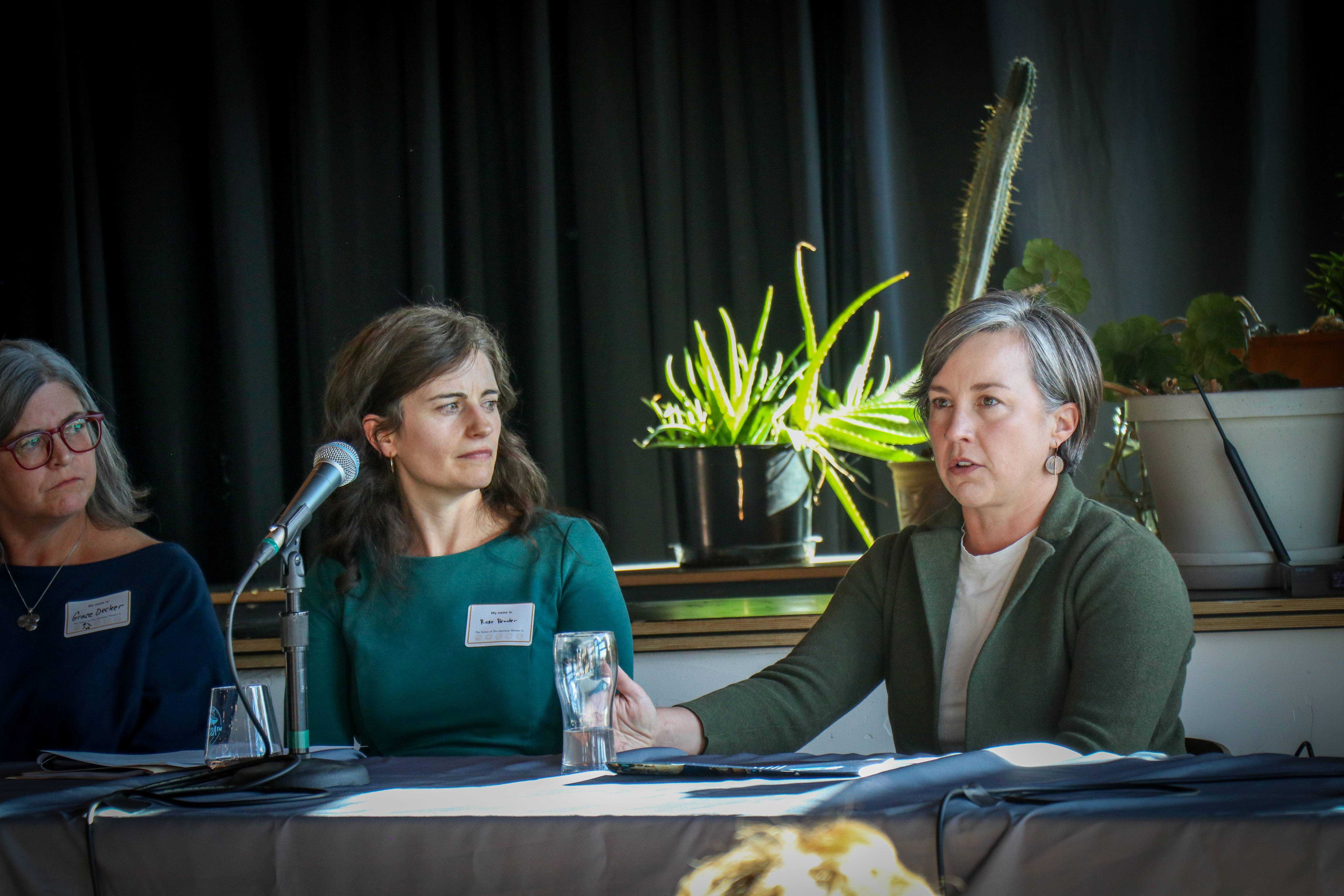
“I’m very concerned with HR 1 (the federal 2025 budget reconciliation law that added Medicaid work requirements) and Medicaid cuts and the destabilization of health care in Montana,” Stephanie Morton, executive director of Healthy Mothers, Healthy Babies — The Montana Coalition, said during a May event launching the updated report. “Labor and delivery is not a money-maker in health care systems.”
If a woman loses Medicaid coverage, a hospital would not be able to bill the program for her care during pregnancy and birth. Without that revenue stream, rural facilities in Montana could be at risk of closure. Already, half of Montana counties are classified as “maternity care deserts,” meaning there are no hospitals offering birth centers or obstetric services. Things look even worse in Indian Country and for people of color, according to the report. In some rural areas, more than 45% of Native women receive inadequate prenatal care. Funding from the Indian Health Service only covers 60% of the health care needs of eligible American Indians, and spending is far less at $4,078 on average per enrollee annually compared with $6,012 for those covered by Medicaid expansion in Montana.
“It has a ripple effect through all of it, and families feel those because they have to travel to access all sorts of care,” Stephanie said. “We are very concerned about reducing the number of labor and delivery sites, and those sites that close down labor and delivery may also close down an OB (obstetrics) practice. When we’re looking at maternal and child health and the distance to care for labor and delivery, we have a very real problem.”
Pregnancy is the time in many women’s lives when they’re most likely to receive medical care, but that becomes less likely when factoring in expensive travel, the need to arrange child care, winter driving hazards, and more, Stephanie said.
“As we’re further shrinking the places and spaces where we can get this kind of care, it is really stressful for women and families,” Stephanie said. “It costs lives at the end of the day, because you are just not close enough to care.”
Beyond illustrating the need for expanded Medicaid coverage, the report makes several policy recommendations for improvement. That includes increasing the income cutoff for pregnancy Medicaid beyond the current threshold of 162% of the federal poverty level, or $24,397 for an individual. In 2025, Montana expanded pregnancy Medicaid coverage to encompass both pregnancy and a full year after the end of the pregnancy. As the report notes, Montana is one of the 10 lowest states in the nation for that threshold.