
Publications & Reports
2026 Status of Montana Women Report Highlights Progress and Persistent Gaps
May 20, 2026
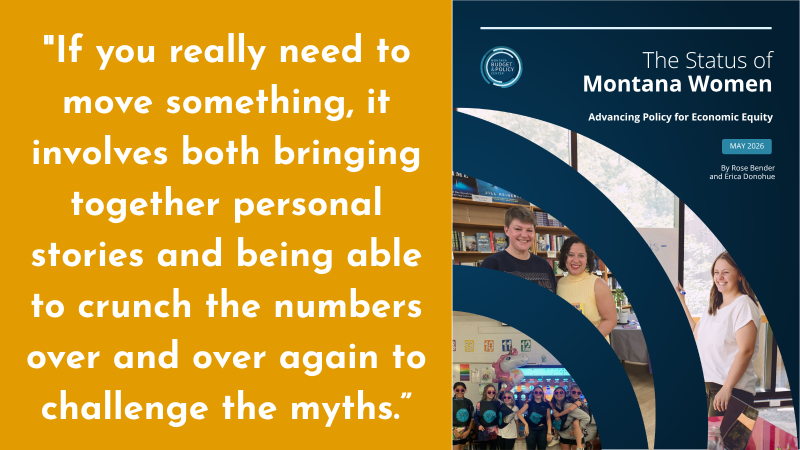
This month, the Montana Budget & Policy Center released the updated Status of Montana Women: Advancing Policy for Economic Equity. The 2026 report, produced with support from the Women's Foundation of Montana, highlights the hard-earned progress Montana women have made, detailing tangible improvements from policies like Medicaid expansion and the establishment of the constitutional right to abortion access and reproductive health care.
It also takes a candid look at the barriers women still face as they shape our state's future, showing through pointed data that though we've made real progress, the work isn't done.
The report offers a roadmap for action, supporting policies that expand access to child care to increase women's workforce participation; grow grants for economic development in Indian Country; and invest more in shelter services for survivors of domestic violence.
This year's report is organized into four categories: economic opportunity, health and well-being, political participation, and improving lives for families in Montana.
Topline takeaways include:
- The gender pay gap persists in Montana, with women earning 71 cents for every dollar men earn. The figure is worse for women of color.
- Affordable child care remains difficult to access, contributing to lower workforce participation among women. Montana women's labor force participation rate is 76%, compared to 83% for men.
- Lack of access to capital is a major barrier to business ownership for women and people of color. Only 36% of loans or investments went to women, while 64% went to men.
- In 2023, more than 40% of all births in Montana were financed by Medicaid. Montana passed Medicaid expansion in 2015, providing affordable, lifesaving medical care to tens of thousands of Montanans. However, recent state eligibility redeterminations have resulted in lost coverage and a rise in the share of women who are uninsured.
- Factors such as intimate partner violence, human trafficking, lower wages, and housing insecurity increase vulnerability to violence. Indigenous Montanans disproportionately account for missing persons cases, making up 26% of cases despite representing only 6.4% of the population.
The report includes the following policy recommendations:
- Passing a state paid family and medical leave policy.
- Expanding the Best Beginnings child care subsidy program to the federal maximum level to support more working parents.
- Extending eligibility for child care scholarships to cover child care workers who are also parents.
- Continuing to invest in solutions to the Missing and Murdered Indigenous Persons epidemic, including sustained community response funding and implementation of MMIP task force recommendations.
- Increasing state funding for non-beneficiary students at Tribal colleges to align with community college funding levels.
- Creating targeted state tax credits, such as a child tax credit or an increase to the earned income tax credit.
- Increasing funding for Indian Country Economic Development to support sustainable economic growth.
- Raising Medicaid eligibility for pregnant and postpartum women from 162% of the federal poverty level to 185%.
- Increasing investments in victim services to support survivors of crime.
In the coming months, we'll dig into specifics from the report and spotlight stories from WFM grantees advancing these issues across Montana, including the persistent effects of pay and wealth inequities, how access to reproductive health care improves economic outcomes, how child care serves as the underpaid and undervalued backbone of Montana's economy, and how the loss of maternal health care services creates cascading effects for communities statewide.
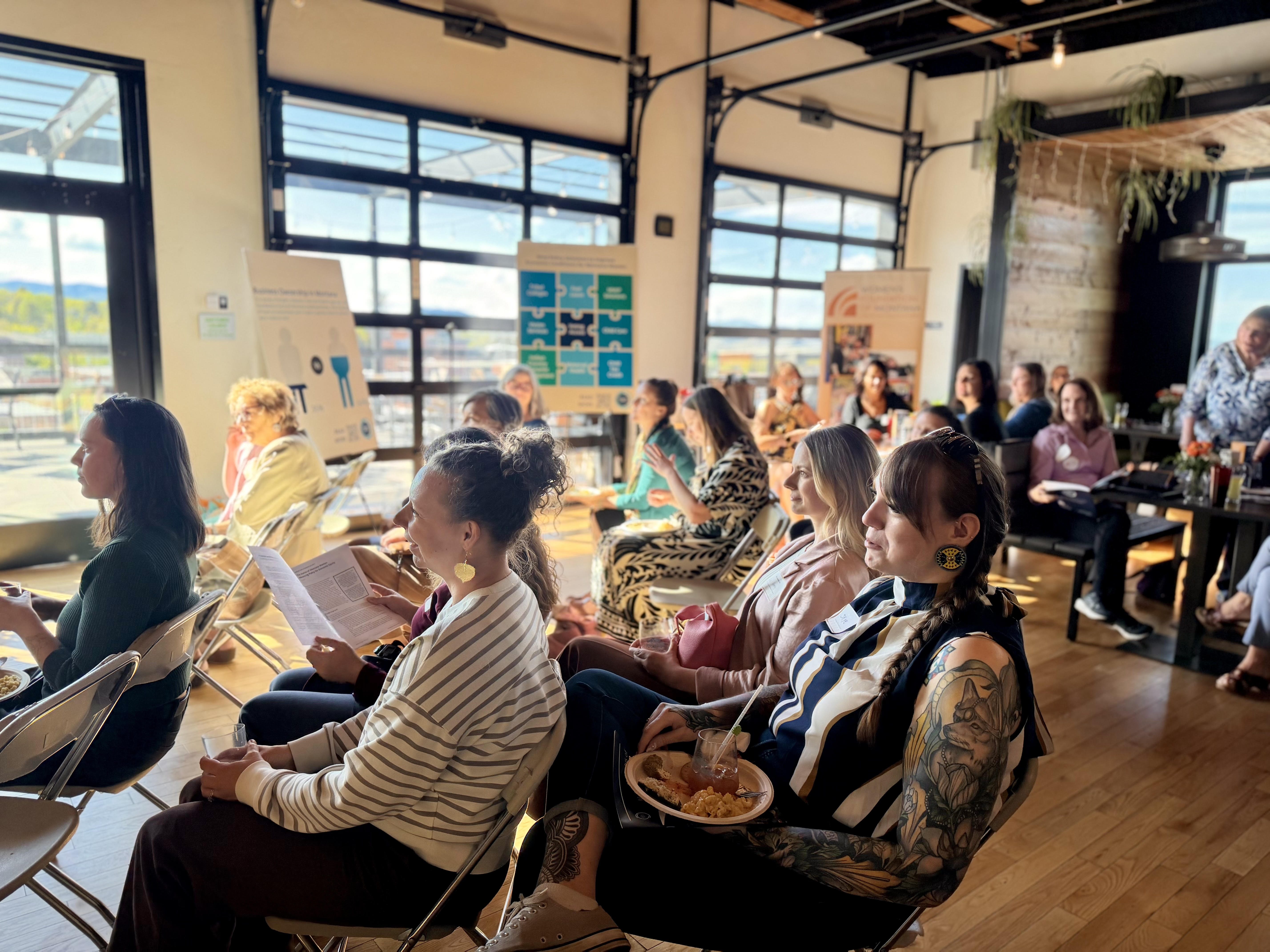
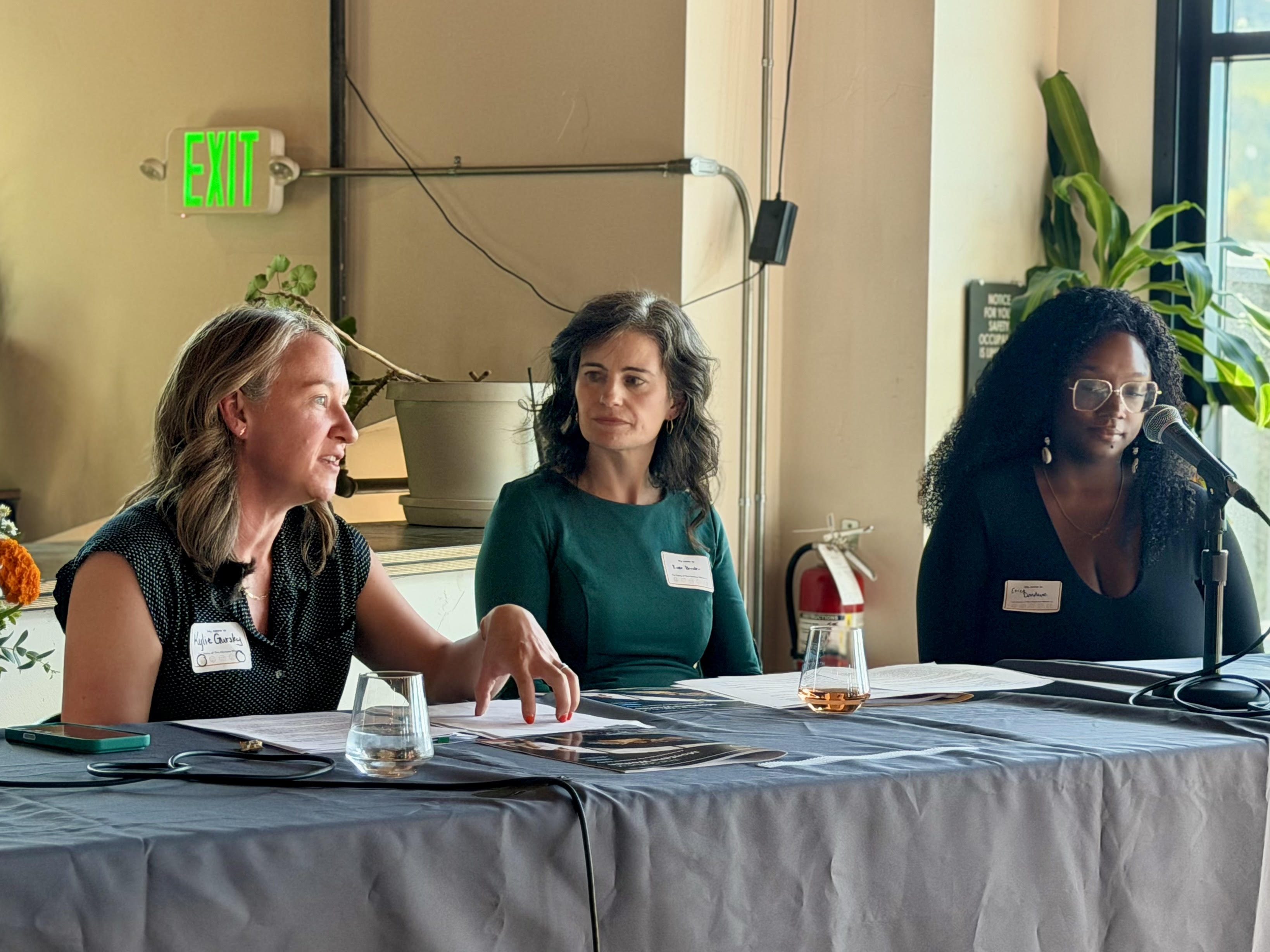
For now, we'll close with a theme shared by every panelist at our May 14 release event: women working together get things done.
"The No. 1 thing that has gotten me through all these years is the ability to work with a community," said Kelsen Young, executive director of the Montana Coalition Against Domestic and Sexual Violence.
"It's the conversations, it's the crying, it's the venting, it's the screaming, it's the strategy, it's knowing that we are the smartest people in the room. It's all the ways that in Montana we don't let the stuff get in the way; we just do the work. Progressive issues make progress in Montana because of how hard people work and how much we focus on doing it together."