Article
Editorial: Progress Happens When Women Lead
August 26, 2026
This August 26, on Women’s Equality Day, we remember Montana's tradition of women’s civic and political leadership.
Women’s Equality Day honors the ratification of the 19th Amendment in 1920, giving women the right to vote. Montana voters approved non-Native women’s right to vote in statewide elections in 1914. Then in 1916, women helped elect Jeannette Rankin to the U.S. House of Representatives, making her the first woman to serve in Congress.
That same year, Montana elected the first two women in the state’s House of Representatives. In 1932, Dolly Cusker Akers was the first Indigenous person elected to the Montana House of Representatives, after Indigenous women were granted the right to vote. And women, including Mae Nan Ellingson and Lynn Sparks Keeley, played critical roles in the 1972 Constitutional Convention, which created a more open, efficient, and democratic state government. Women have worked to secure the rights to own property, hold credit cards in our own names, and make our own reproductive healthcare choices.
But history has shown that progress isn’t fast or linear.
The 2026 Status of Montana Women: Advancing Policy for Economic Equity report found that although women in Montana vote at a similar rate as men, we remain under-represented in the state Legislature, especially Native women. And Jeannette Rankin remains the only woman Montana has sent to Congress.
That underrepresentation has consequences. Women lawmakers are more likely to support policies that make our communities healthier, more peaceful, and more democratic. We govern for everyone by supporting women and families, strengthening education and healthcare, and helping people living in poverty. When women serve, we bring our voices and perspectives to the issues that advance all women and, in turn, families and communities across the state.
One recent example is women leading the way in advancing affordable, accessible childcare, enabling parents to work. This progress should matter to everyone. But childcare businesses and the workforce are largely women, whose work is often undervalued and undercompensated. That means it is frequently overlooked by the men who also benefit. Having women in legislative chambers matters: we bring the realities of the work that sustains our communities into policy decisions.
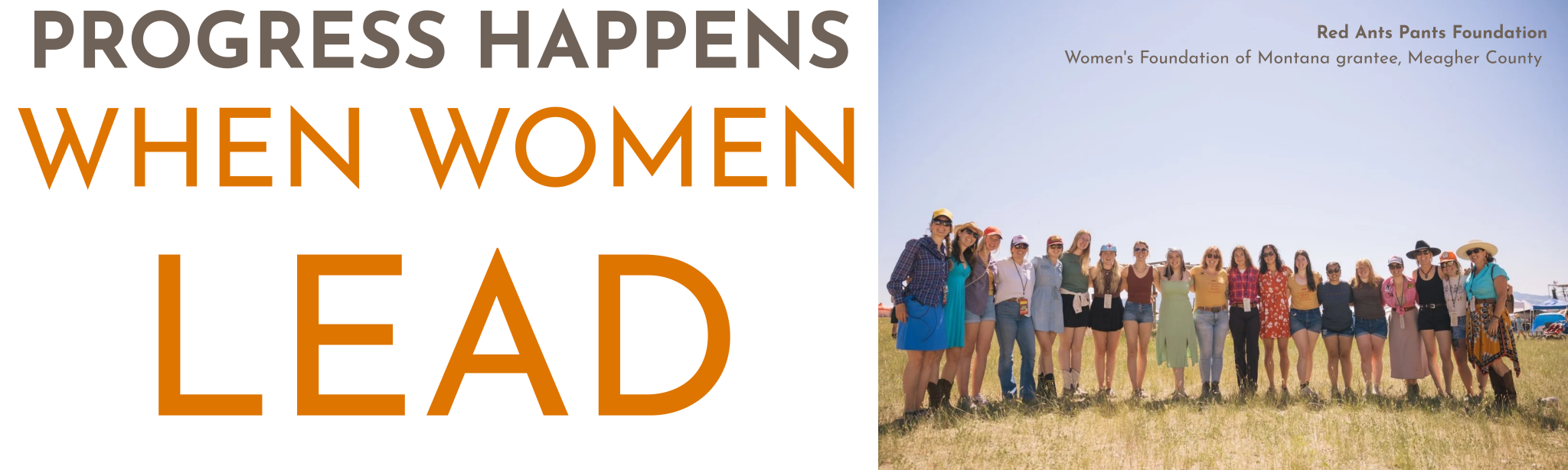
Our communities benefit from women's leadership. The 2026 Status of Women Report found that women face barriers to business ownership. However, research shows that higher rates of women’s entrepreneurship correlate with stronger local economic outcomes: women-owned businesses tend to invest more in local supply chains, create more jobs for women, support other women, and reinvest their earnings locally. In Meagher County, 77% of surveyed business owners were women, which is one reason its local economy punches above its weight.
Each generation inherits progress made by those who came before, along with the responsibility to defend it and carry it forward. That’s why the Women’s Foundation of Montana exists: to support women and women-led organizations to overcome persistent barriers and emerging challenges.
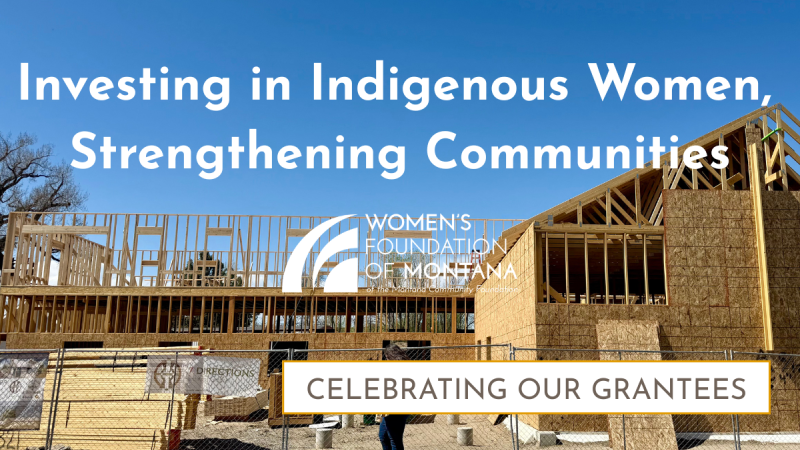
We invest in organizations expanding opportunities for Montana women to lead, including in rural and reservation communities. Together, we are building a Montana where women can earn a good living, care for their families, serve in public office, build businesses, lead their communities, and shape their own futures.
So today, we honor Women’s Equality Day and Montana’s legacy of women’s equality not simply by remembering how far we have come, but by continuing the work they began: creating opportunities for women to lead, ensuring women’s work is valued and fairly rewarded, and building systems that support the caregiving that makes our families, communities, and economies possible. Because progress happens when women lead. And Montana is stronger when we do.
Kylie Gursky, Director, Women’s Foundation of Montana
The Women’s Foundation of Montana (WFM) was established at the Montana Community Foundation in 1999. Since then, WFM has awarded nearly $1 million to more than 50 organizations in Montana to support positive systemic change that benefits women and girls. To learn more, visit https://wfmontana.org/.